

AI-Driven Hyperpersonalization: The New Baseline in CRM Strategy
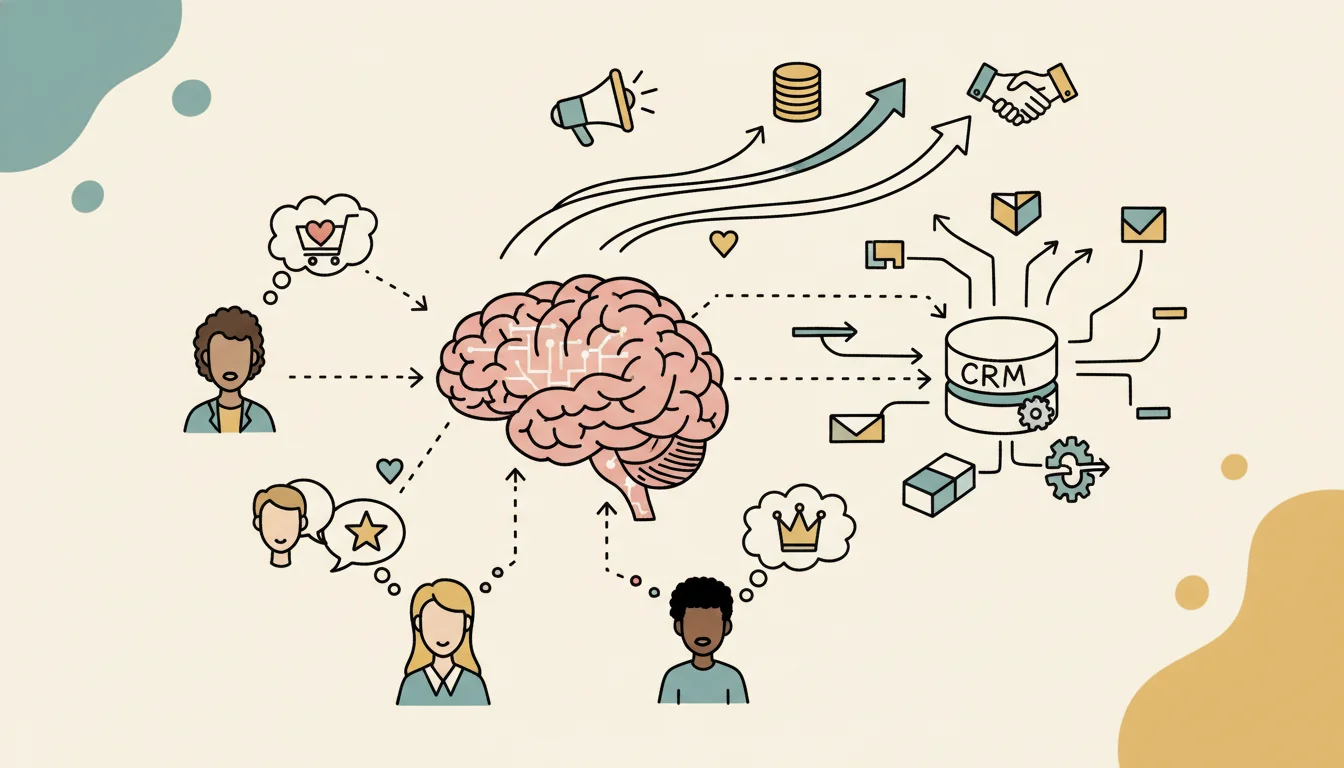
The era of inserting a customer's first name into an email subject line and calling it personalization is firmly over. According to leading CRM and marketing research, hyperpersonalized emails generate up to 6x higher transaction rates compared to generic broadcast messages. Customers today are bombarded with hundreds of digital touchpoints daily, and only brands that deliver timely, contextually relevant, one-to-one experiences manage to cut through the noise. AI-driven hyperpersonalization has rapidly evolved from a competitive differentiator into a baseline expectation that shapes how modern CRM strategies are designed and executed.
The core problem that this shift addresses is the growing disconnect between what customers expect and what most organizations actually deliver. Broad segmentation, static customer journeys, and rule-based automation simply cannot keep pace with the complexity and speed of modern customer behavior. Marketers and CRM professionals are under pressure to move beyond demographic buckets and into dynamic, behavior-driven experiences that adapt in real time. Without AI, achieving this level of personalization at scale is practically impossible, regardless of how talented the team is.
This article provides a comprehensive, expert-level guide to understanding and implementing AI-driven hyperpersonalization within CRM strategies. You will learn why this approach is becoming the new standard, how AI and CRM technologies work together to power it, and what practical steps your organization can take to move from static segmentation to truly predictive, individualized customer experiences. Real-world patterns, common pitfalls, and a clear roadmap are all covered in depth.
Why AI-Driven Hyperpersonalization Is Becoming the New CRM Standard
Several powerful forces are converging to push AI-driven hyperpersonalization from an advanced capability to a table-stakes requirement in CRM. First and foremost, customer expectations have fundamentally shifted. Consumers no longer compare their experience with your brand only against direct competitors — they compare it against the best digital experience they have ever had, whether that is from a streaming platform, a global retailer, or a fintech app. This means the bar is continuously rising, and brands that rely on generic, segment-level messaging are increasingly perceived as out of touch and irrelevant.
Digital channels are also more saturated than at any previous point in history. The average professional receives over 120 emails per day, and social media feeds are algorithmically curated to show only the most engaging content. In this environment, relevance is the critical filter that determines whether a message is opened, acted upon, or ignored entirely. AI-driven CRM strategies address this challenge directly by ensuring that every communication reflects the individual's current interests, recent behaviors, and predicted intent — not a static profile built months ago.
Competitive pressure is another major driver. As more organizations integrate AI into their CRM and marketing stacks, hyperpersonalization is quickly resetting the baseline for what good customer experience looks like. Companies that remain stuck on broad segmentation and pre-planned, fixed journeys risk losing customers to competitors who can respond faster, more accurately, and more relevantly. The performance gap between AI-driven hyperpersonalization and traditional approaches is widening, making adoption not just a strategic advantage but a competitive necessity.
- Hyperpersonalized emails deliver up to 6x higher transaction rates versus generic campaigns
- AI-driven CRM reduces churn by identifying at-risk customers before they disengage
- Real-time personalization increases average order value through predictive cross-sell and upsell
- Dynamic customer journeys outperform static, pre-planned flows in engagement and conversion metrics
How AI and CRM Technology Work Together to Enable Hyperpersonalization
At the technical heart of AI-driven hyperpersonalization is the integration of advanced machine learning models with unified, multi-dimensional customer data stored in modern CRM systems. Traditional CRM platforms held relatively simple records — contact details, purchase history, and basic interaction logs. Today's CRM environments are connected to ecommerce platforms, web and app analytics tools, social channels, offline point-of-sale systems, and customer service platforms. This creates a rich, continuously updated single customer view that AI models can analyze to infer intent, predict behavior, and trigger personalized responses in real time.
AI-enhanced segmentation represents one of the most impactful applications within this ecosystem. Rather than grouping customers by broad demographic traits such as age or location, machine learning algorithms analyze behavioral patterns — browsing sequences, purchase frequency, engagement timing, content preferences, and response to previous campaigns — to create dynamic micro-segments. These segments are not static; they update automatically as new behavioral signals arrive, ensuring that targeting and messaging always reflect the customer's current state rather than a historical snapshot.
Predictive analytics and real-time decisioning complete the picture by enabling CRM systems to act proactively rather than reactively. Machine learning models can forecast churn probability, purchase likelihood, optimal offer type, price sensitivity, and the best channel and time to reach each individual. These predictions feed directly into automated workflows that trigger personalized emails, push notifications, website content changes, or sales team alerts — all without manual intervention. The result is a CRM environment where AI drives continuous, scalable personalization that would be impossible to replicate through human decisioning alone.
Practical Implementation Roadmap for CRM and Marketing Teams
Implementing AI-driven hyperpersonalization successfully does not begin with selecting tools or deploying algorithms — it begins with strategic clarity and data readiness. The first step is defining precise business objectives that hyperpersonalization should support. Whether the goal is reducing churn, increasing conversion rates, improving Net Promoter Score, or driving cross-sell revenue, these KPIs must guide every subsequent decision about data collection, model selection, and campaign design. Organizations that skip this step often end up with AI capabilities that generate impressive technical outputs but fail to move the metrics that matter to the business.
Data auditing and unification is the second critical phase. Teams must map all sources of customer data across the organization — CRM records, ecommerce transaction logs, website analytics, mobile app events, social interactions, and offline data from retail or call centers. Each source must be evaluated for quality, completeness, and compliance with privacy regulations such as GDPR and CCPA. The goal is to consolidate these streams into a single source of truth that AI models can access reliably and that marketing teams can activate across channels without friction.
Once data is unified, the next phase involves deploying AI-powered segmentation and predictive models. Clustering algorithms can discover natural customer groups based on behavioral and value signals, while supervised models can predict churn, purchase probability, and next-best-action recommendations. These outputs must then be connected to the marketing and CRM execution stack — email platforms, website personalization engines, paid media systems, and sales CRM tools — so that AI insights translate directly into personalized customer interactions. Ongoing model validation and refinement using fresh data ensures accuracy improves over time rather than degrading.
Real-World Applications and Emerging Patterns Across Industries
In ecommerce and retail, AI-integrated CRM systems are delivering hyperpersonalized customer journeys that adapt at every touchpoint. Retailers track behavioral signals — product views, search queries, cart additions, and purchase patterns — and convert them into real-time recommendations and individualized offers. Lifecycle campaigns such as welcome sequences, cart abandonment flows, replenishment reminders, and win-back programs are all informed by predictive models rather than fixed time-based rules. The practical outcome is that each customer receives communications that feel genuinely relevant to their current situation, not a generic template sent to thousands of people simultaneously.
In B2B environments, AI-driven hyperpersonalization is transforming account-based marketing and sales operations. CRM-embedded AI models identify high-value accounts at risk of churn, flag accounts showing expansion signals, and surface the specific personas within an account that are most likely to respond to outreach. This enables sales and marketing teams to prioritize their efforts with far greater precision, personalizing messaging at both the account and individual contact level. Organizations using this approach report significant improvements in pipeline velocity, deal win rates, and customer retention.
Financial services, travel, and subscription businesses are also rapidly adopting hyperpersonalized CRM strategies. In financial services, AI models analyze transaction patterns to identify customers who may benefit from specific products — a savings account, a refinancing offer, or an investment product — and trigger personalized outreach at the optimal moment in the customer's financial journey. In subscription businesses, predictive churn models enable proactive retention campaigns that reach at-risk customers with tailored incentives before they decide to cancel. Across all these industries, the common thread is that hyperpersonalization is no longer a pilot project — it is becoming a core, embedded CRM capability.
Common Mistakes Organizations Make When Adopting AI Hyperpersonalization
One of the most frequent and costly mistakes is treating hyperpersonalization as a technology project rather than a customer strategy. Organizations that lead with tool selection — purchasing an AI platform or CDP before defining clear use cases and KPIs — often end up with sophisticated systems that are underutilized or misaligned with actual business needs. The technology should always serve a well-defined customer experience strategy, not the other way around. Teams that skip the strategic foundation phase typically struggle to demonstrate ROI and lose organizational buy-in for further investment.
Data quality and governance failures represent another major obstacle. AI models are only as good as the data they are trained on, and many organizations discover too late that their customer data is fragmented, inconsistent, or non-compliant with privacy regulations. Investing in data infrastructure — identity resolution, deduplication, consent management, and integration pipelines — is not glamorous work, but it is the foundation on which all AI-driven personalization depends. Organizations that rush to deploy models on poor-quality data produce inaccurate predictions and irrelevant experiences that actively damage customer trust.
Finally, many organizations underestimate the importance of cross-functional alignment. Hyperpersonalization touches marketing, data engineering, IT, product, legal, and customer success teams simultaneously. Without clear governance structures, shared KPIs, and regular feedback loops between these functions, personalization initiatives become siloed, inconsistent, and difficult to scale. Building a cross-functional center of excellence or steering committee dedicated to hyperpersonalization strategy is one of the most effective organizational investments a company can make in this space.
Key Benefits and Business Impact of AI-Driven Hyperpersonalization
The business case for AI-driven hyperpersonalization is well-supported by both research and real-world performance data. On the revenue side, personalized product recommendations and predictive cross-sell flows consistently outperform generic promotional campaigns by significant margins. Brands that implement AI-driven email personalization — including dynamic content, individual send-time optimization, and behavior-triggered sequences — report transaction rate improvements of 3x to 6x compared to batch-and-blast campaigns. These gains compound over time as models improve and customer data becomes richer and more comprehensive.
Customer retention and lifetime value improvements are equally compelling. Predictive churn models enable organizations to identify at-risk customers weeks or months before they disengage, creating a window for proactive intervention with personalized retention offers or outreach. This is far more cost-effective than reactive win-back campaigns, which must overcome the inertia of a customer who has already mentally moved on. Research consistently shows that increasing customer retention rates by even 5% can increase profits by 25% to 95%, making churn prediction one of the highest-ROI applications of AI in CRM.
Beyond direct revenue metrics, AI-driven hyperpersonalization also delivers measurable improvements in customer satisfaction and brand perception. When customers consistently receive communications and offers that feel genuinely relevant and timely, their trust in the brand increases. This translates into higher Net Promoter Scores, more positive reviews, and greater willingness to share data — which in turn feeds better AI models and even more precise personalization. This virtuous cycle of data, AI, personalization, and trust is what separates organizations that are truly leading in customer experience from those that are merely keeping pace.
Frequently Asked Questions
What is the difference between personalization and hyperpersonalization in CRM?
How much data do you need to start implementing AI-driven hyperpersonalization?
Which CRM and marketing technology platforms best support AI hyperpersonalization?
How do you ensure AI hyperpersonalization complies with GDPR and CCPA privacy regulations?
What are the most common reasons AI hyperpersonalization initiatives fail to deliver ROI?
How long does it typically take to see measurable results from AI-driven hyperpersonalization?
Can small and mid-sized businesses implement AI hyperpersonalization, or is it only for enterprise organizations?
How does AI hyperpersonalization affect customer trust, and how can brands avoid the 'creepy' factor?
Conclusion: Building a CRM Strategy for the Hyperpersonalized Default
AI-driven hyperpersonalization has crossed the threshold from competitive advantage to baseline expectation in modern CRM strategy. Customers now assume that brands will recognize their context, anticipate their needs, and respond in real time with interactions that are genuinely relevant to their current situation. Organizations that continue to rely on broad segmentation, static customer journeys, and generic messaging are not simply falling behind best practice — they are actively eroding customer trust and loyalty in a market where personalized alternatives are increasingly available. The evidence is clear: AI-powered CRM strategies deliver measurably superior outcomes across engagement, conversion, retention, and lifetime value metrics.
For CRM and marketing professionals, the path forward requires treating data quality and unification as strategic assets rather than IT concerns, investing in AI capabilities that translate unified data into dynamic, predictive customer experiences, and embedding hyperpersonalization into everyday campaign execution rather than reserving it for special projects. Cross-functional alignment, clear governance, and a commitment to privacy-by-design are equally essential for sustainable, scalable results. Organizations that make this transition thoughtfully and systematically will not only see stronger business metrics — they will redefine what customer-centric CRM looks like in an AI-driven world.
- AI-driven hyperpersonalization is now a baseline CRM expectation, not a differentiator — organizations must adopt it to remain competitive and relevant to modern customers.
- A unified, high-quality customer data foundation is the single most critical prerequisite — without it, even sophisticated AI models will produce inaccurate predictions and poor experiences.
- Successful implementation starts with strategic clarity: define specific KPIs and use cases before selecting technology or deploying models.
- Cross-functional alignment across marketing, data, IT, product, and legal teams is essential — hyperpersonalization cannot be owned or executed by a single department in isolation.
- Privacy compliance and transparent data practices are not obstacles to hyperpersonalization — they are foundational to building the customer trust that makes personalization effective and sustainable over the long term.
Your evaluations help make the blog even better and more informative.